Free-Feeding vs. Scheduled Meals: Which Is Right for Your Puppy?
Scheduled meals win for nearly every puppy — they make house-training predictable, keep growth in check, and turn a skipped meal into an early warning you can actually see. Here's the fair case for free-feeding, the two real exceptions, and a step-by-step way to move a grazer onto a schedule without a standoff.

Contains affiliate links · our policy
In this guide
- What Free Feeding and Scheduled Feeding Actually Mean
- Should I Leave Food Out for My Puppy? Five Reasons We Say No
- Free Feeding Puppy Pros and Cons: The Honest Version
- But My Puppy Inhales a Scheduled Meal in Nine Seconds
- The Real Exceptions: Toy Breeds and Medically Fragile Puppies
- How to Switch a Grazing Puppy to Scheduled Meals
- Where an Automatic Feeder Fits (and Where It Doesn't)
- The Bottom Line
- Our Top Picks
- FAQ
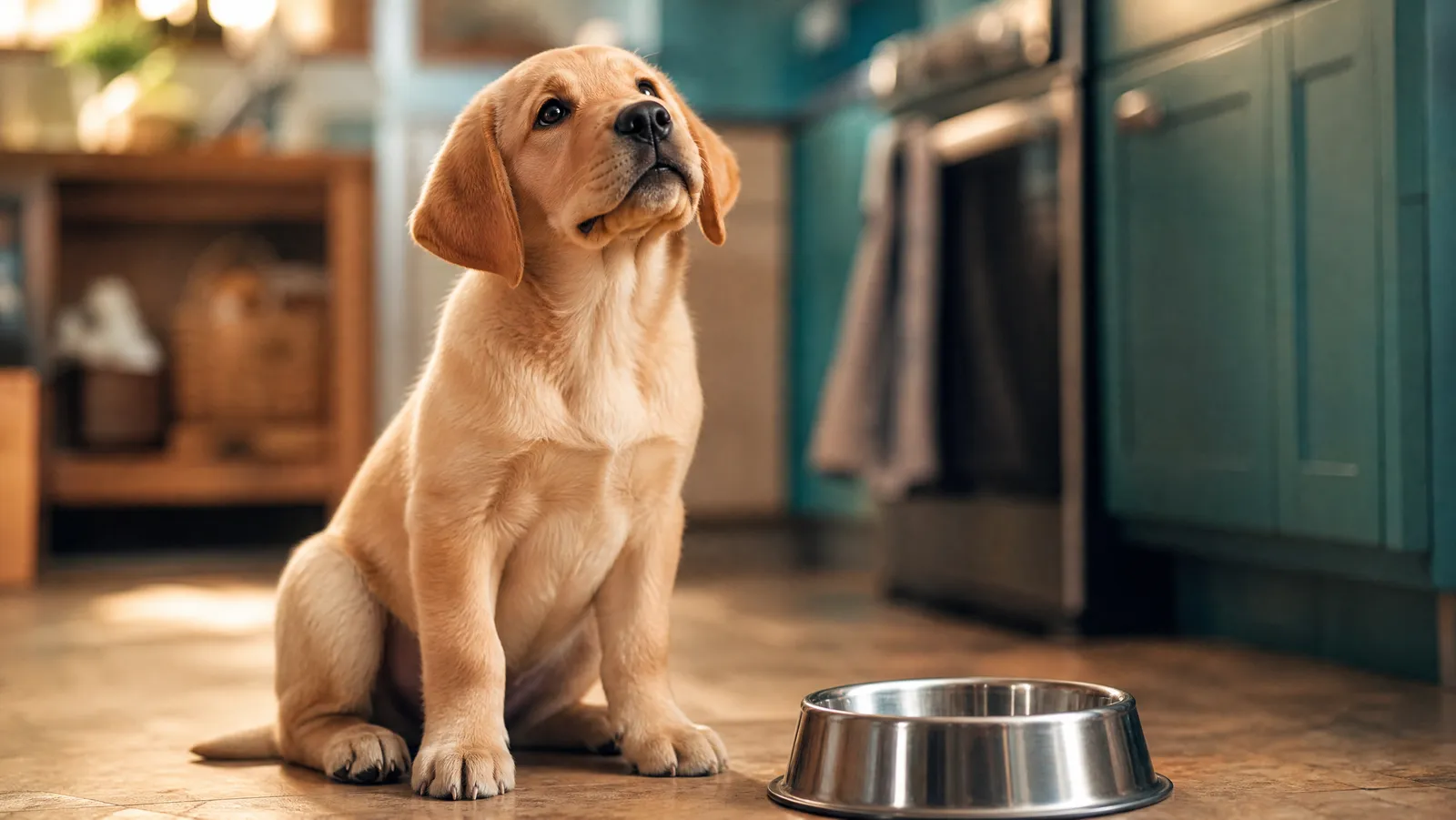
For nearly every puppy, scheduled meals win. Measured portions at set times give you house-training predictability, control over how fast your puppy grows, and an early warning the day they stop eating — three things an always-full bowl quietly takes away. Free-feeding has a narrow set of legitimate uses. A growing puppy is almost never one of them.
That's the honest answer to the free feeding vs scheduled feeding puppy question, and we'd rather say it plainly than pretend the two options are evenly matched. But "scheduled" only means something once you know how many meals and how much food, so pair this with our puppy feeding schedule before you set any alarms. Then stick around for the parts that actually take work: the fair case for grazing, the two real exceptions, and how to move a puppy who has been free-fed for six weeks onto a schedule without a standoff.
What Free Feeding and Scheduled Feeding Actually Mean
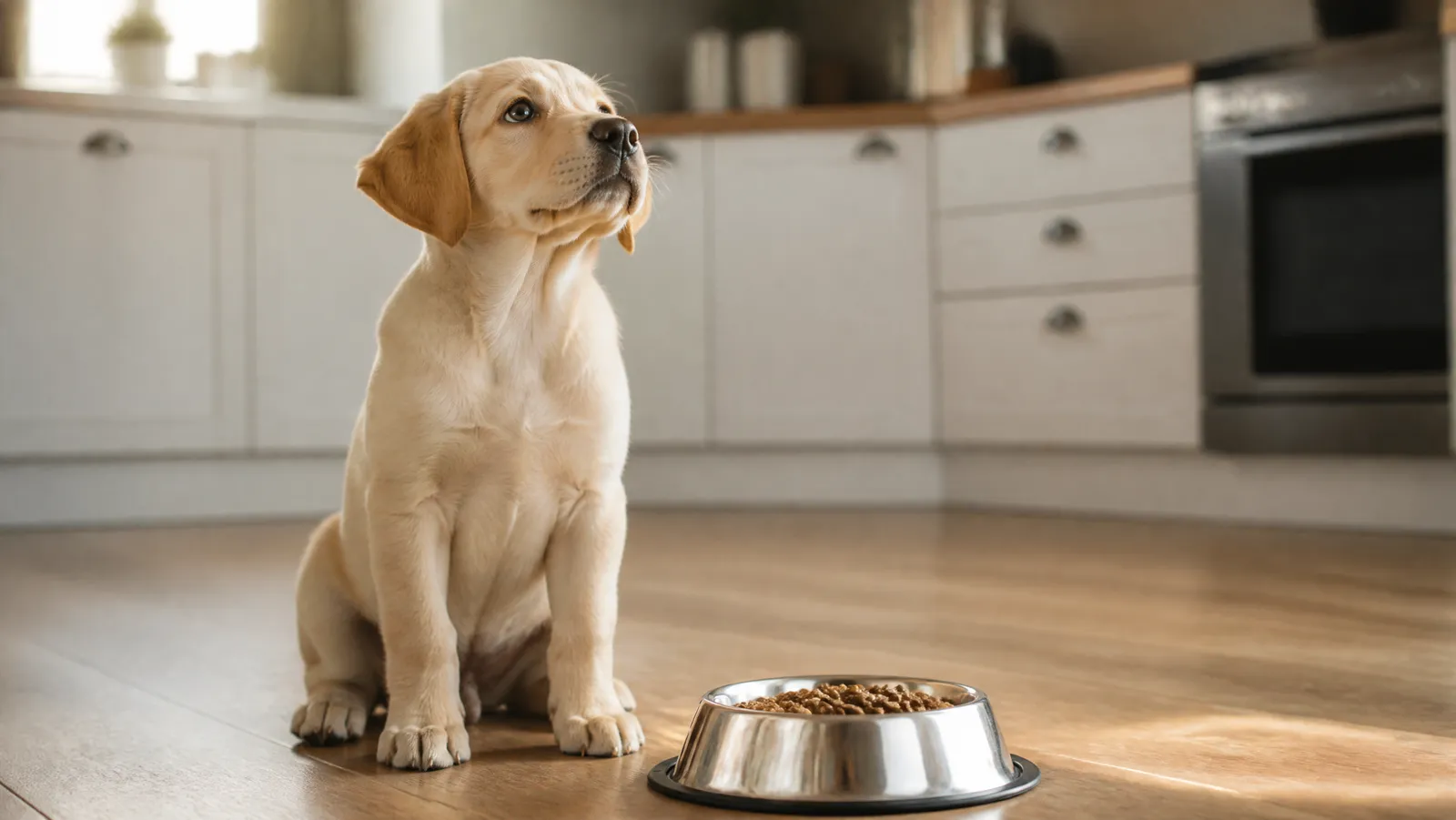
Free feeding (or "ad lib" / "free choice" feeding) means a bowl of dry food stays available and your puppy eats whenever they like. Scheduled feeding means a measured portion goes down at set times, stays down for a bounded window, and then comes up.
A lot of people are quietly doing a third thing: portion-controlled grazing, where you measure the day's food in the morning and let the puppy work through one bowl. Better than a bottomless bowl — you at least know the daily total — but it still gives up meal timing, and meal timing does most of the work below.
Should I Leave Food Out for My Puppy? Five Reasons We Say No
1. House training gets dramatically easier
This is the benefit owners feel inside a week. Predictable food in means predictable output. The AKC's potty-training guidance says to take your puppy out between 5 and 30 minutes after a meal — sooner for younger puppies — which gives you a tight, usable window: if breakfast is at 7:00, you know roughly when to be standing in the yard. Free-feeding smears that signal across sixteen hours and leaves you guessing.
2. You can actually control growth rate and weight
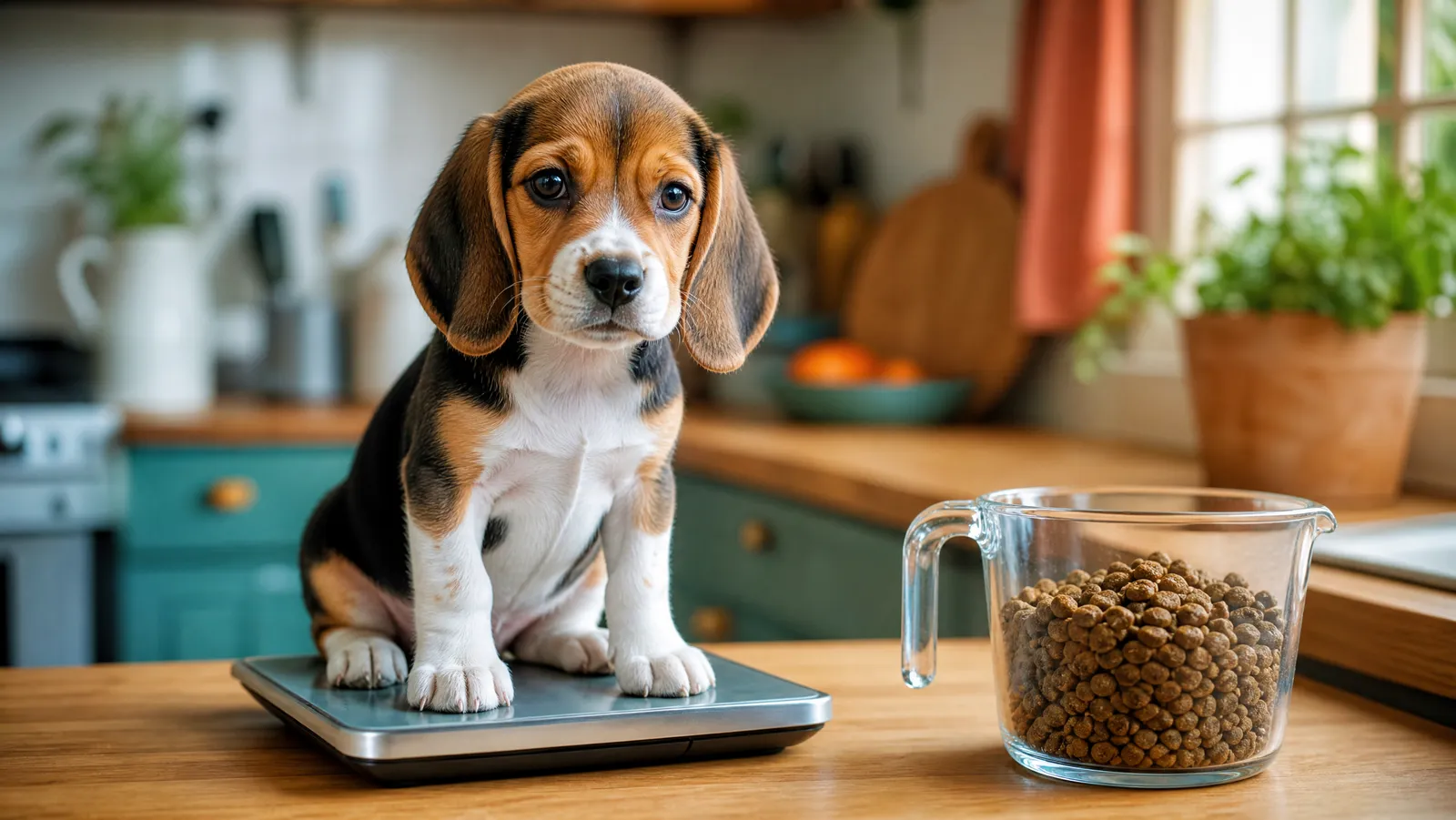
Portion-controlled meals are the only way to know what your puppy ate, which is the only way to adjust. And the baseline here is not encouraging: the Association for Pet Obesity Prevention's 2022 clinical survey found 59% of dogs evaluated in the US were overweight or had obesity — 37% overweight, 22% obese. Puppies do not get a pass on that trajectory; they set it.
For large-breed puppies, growing too fast carries its own orthopedic cost, and lean growth is one of the better-supported ideas in canine nutrition. The classic citation is Purina's 14-year life span study, published in JAVMA in 2002: 48 Labrador Retrievers were paired within litters, and one of each pair was fed 25% less than its littermate from 8 weeks of age. The restricted-fed dogs had a median life span of 13 years versus 11.2 years for the control group, and chronic conditions including osteoarthritis appeared later. Two caveats: that was a controlled 25% restriction against a paired control, not a license to underfeed your own puppy, and it was one breed in one facility. It supports keeping a puppy lean. It does not tell you a portion size — your vet and your food's feeding chart do.
3. Appetite is a vital sign you can only read on a schedule
A puppy who walks away from a scheduled meal is telling you something within hours. With a full bowl on the floor, you might not notice for a day, and a day is a long time in a small animal. VCA notes that measured, timed portions let owners detect the appetite changes that can signal illness — that early-warning function is, for our money, the single strongest argument for meal feeding, and it costs nothing.
4. Multi-pet households make free-feeding unworkable
With two or more animals and an open bowl, you have no idea who ate what. The AKC's multi-pet feeding guidance recommends set mealtimes rather than free feeding, advises feeding each pet separately in its own location, and says to pick up an unfinished bowl rather than let another dog clear it — specifically to help prevent resource guarding and mealtime conflict.
5. Kibble left out doesn't stay good
Modest but real. The AKC's guidance on dog food storage explains that dry food exposed to air undergoes lipid oxidation, which breaks down fat molecules and causes rancidity, and that air and light are the enemies. It also says to discard food showing evidence of pest infestation such as ants or rodent droppings. A bowl sitting open on a kitchen floor for twelve hours is the exact condition that advice is written against.
Ask your vet before you change anything
Portion sizes, meal counts, and the timing of every transition should be set with your veterinarian, using your puppy's breed, projected adult weight, and body condition score. This article is about the structure of feeding, not the amount. If your puppy is already over or under weight, or has any medical condition, the plan needs to come from your vet first.
Free Feeding Puppy Pros and Cons: The Honest Version
We're not going to strawman this. People free-feed for real reasons, and some of them are good.
What free-feeding genuinely offers:
- Convenience. No alarms, no midday trip home, no bowl to retrieve.
- A gentler fit for true grazers. Some dogs — more often cats — eat little and often by nature, and an owner who has watched that for years isn't imagining it.
- Less mealtime pressure for anxious or picky eaters. For a dog with a history of food stress, an ever-present bowl lowers the stakes.
- No standoffs. You never have to pick up an untouched bowl and walk away.
What it costs, specifically: structure, portion knowledge, and early illness signals. Set that against a puppy's actual needs — house training, controlled growth, and a body you're still learning to read — and the trade is bad. The convenience is real. It's just paid for with the three things a puppy needs most.
One more piece of honesty: the evidence comparing feeding styles head-to-head in dogs is thinner than the internet implies. Most of what we know is downstream — obesity risk, growth rate, guarding behavior — not a clean trial of bowl-out versus bowl-down. Veterinary consensus points one direction and points there consistently, but it's consensus and mechanism more than one decisive study.
But My Puppy Inhales a Scheduled Meal in Nine Seconds
This is the best argument free-feeders make, and it deserves a real answer. A puppy who gulps a measured portion in under ten seconds may gag, may bring it back up, and may not feel full — so it's tempting to conclude that spreading food over the day is kinder.
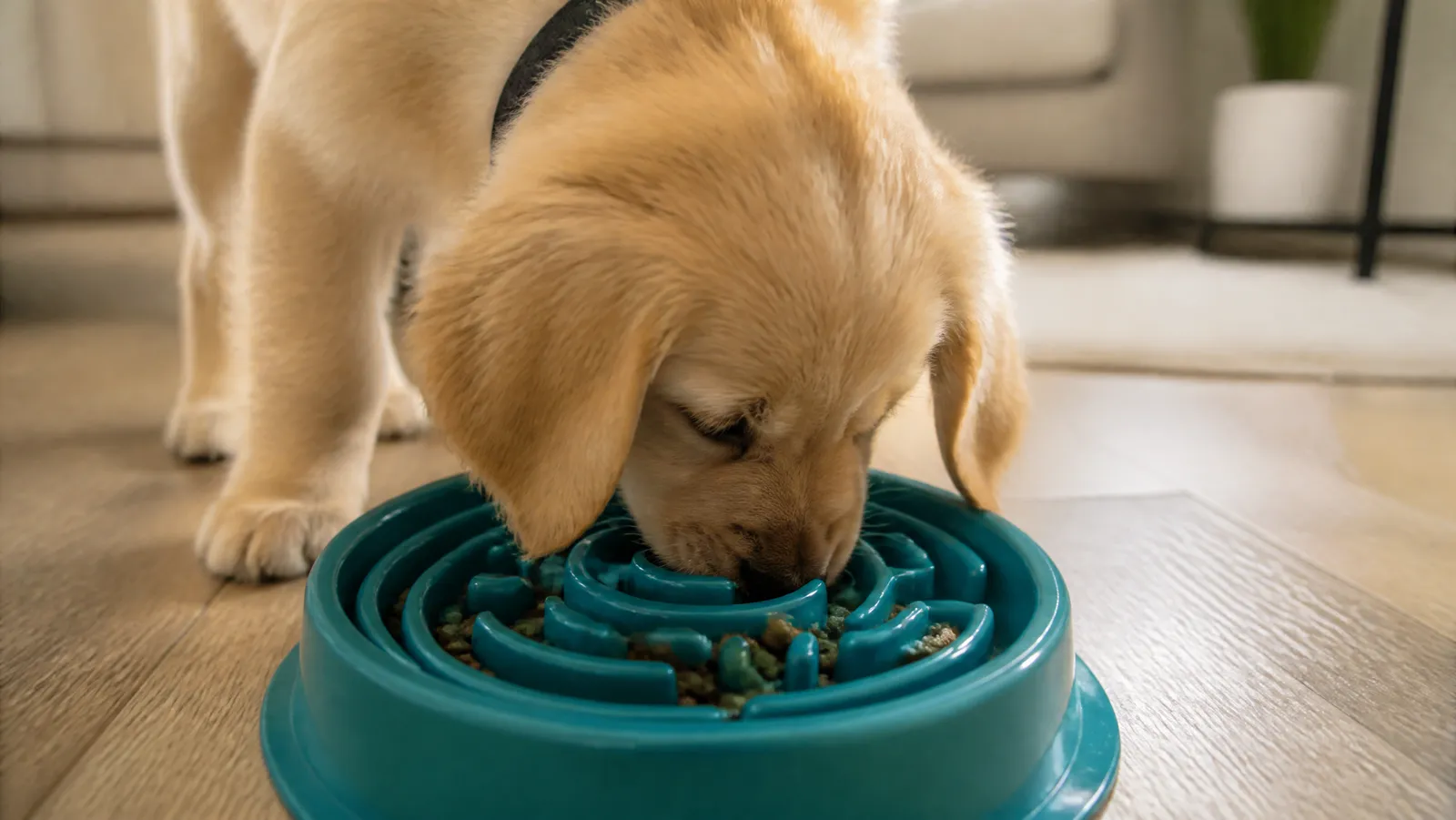
The fix isn't an open bowl. It's slowing the meal down. A maze-bottom or ridged bowl makes a fast eater work around obstacles instead of scooping. A knowledge summary published in Veterinary Evidence concluded that slow-feeder bowls do reduce how fast dogs eat compared with a standard bowl — dogs get quicker with practice, but still eat more slowly — so a gulped meal generally stretches out without changing a single gram of food. If that's your puppy, start with the best slow feeder bowls for puppies — a good one costs less than a bag of food. Splitting the same daily amount across more meals helps too, which brings you back to how often to feed a puppy: four meals a day up to about three months, three from three to six months, and two from six months on, per the AKC's puppy feeding timeline. More frequent meals plus a slow feeder handles most gulpers.
The Real Exceptions: Toy Breeds and Medically Fragile Puppies
Toy-breed puppies and low blood sugar
Very small and toy-breed puppies can be prone to hypoglycemia. Purina Pro Club's guidance on toy-breed hypoglycemia explains that puppies have not fully developed the ability to regulate blood glucose and have a high requirement for it, and recommends small, frequent meals — commonly cited as four to six a day — to keep levels stable. Note what that is: more scheduled meals, not an open bowl. A grazing puppy can still go five hours without touching food and you'd never know. Signs of a hypoglycemic episode — wobbliness, weakness, disorientation, collapse — are an emergency. If you have a toy-breed puppy, ask your vet for a feeding interval and a plan before you need one.
The second exception is underweight, recovering, or medically fussy puppies. A puppy rebuilding condition after illness, or one with a diagnosed condition affecting appetite, may genuinely need continuous or very frequent access to food. That's a vet-directed plan with a defined endpoint, not an owner leaving the bowl down indefinitely. If your puppy isn't gaining weight on a normal schedule, call your vet — don't switch to free-feeding.
How to Switch a Grazing Puppy to Scheduled Meals
If you've been free-feeding, you don't need a slow taper. You need one clean change and a few days of nerve. Here's the routine we'd use.
- 1
Pick your times and write them down
Choose meal times that fit a normal weekday — the schedule you can actually keep on a Tuesday, not an ideal one. Use the meal count for your puppy's age, and keep the same daily total of food, just divided. Consistency of timing matters more than the exact clock times.
- 2
Serve the measured portion and set a timer
Put down the portion, start a timer, and go do something else. The AKC's puppy feeding guidance suggests not leaving food down for more than 15 minutes; 15 to 20 minutes is the window commonly cited by vets and trainers. Don't hover, don't hand-feed, don't top it with anything to make it more appealing.
- 3
Pick the bowl up without commentary
When the timer goes, the bowl comes up — empty or not. No sighing, no negotiating, no second offer. Your puppy learns the rule from what happens, not from how you feel about it.
- 4
Nothing until the next scheduled meal
No snacks, no chews with calories, no crumbs from the counter. Training treats are fine — that's how training works — but keep them tiny and count them against the day's total. A grazer who can top up between meals has no reason to eat at meals.
- 5
Expect one or two unimpressed meals, then move on
A healthy puppy who has been free-fed will often skip a meal or two while working out that the rules changed. That's normal, and it usually resolves within a couple of days. Keep serving at the same times and keep picking the bowl up.
- 6
Know the line where this stops being a training question
A puppy who genuinely refuses food for more than about a day, or who is lethargic, vomiting, having diarrhea, or seems unwell in any way, needs a veterinarian — immediately, and sooner for a very small or toy-breed puppy. This is never a willpower contest. If you're unsure whether you're looking at stubbornness or sickness, assume sickness and call.
Where an Automatic Feeder Fits (and Where It Doesn't)
The marketing muddles this, so let's be clear: an automatic feeder is a scheduled-feeding tool. It dispenses a measured portion at a set time, then closes. It is not a free-feeding device, and we would not leave a gravity or hopper feeder open for a puppy to graze from — that's an open bowl with a bigger reservoir behind it.
Also worth saying: none of this is required. A measuring cup and a phone alarm cost nothing and work perfectly. A feeder solves exactly one problem — the midday meal nobody is home to serve — which a puppy eating three or four times a day makes common.
If that's your situation, the simplest version is usually enough. The PetSafe Analog 2-Meal Pet Feeder is about $22 as of August 2026, holds 1.5 cups in each of two compartments, and uses dial timers with no app to configure. Because it holds nothing in reserve, it cannot over-dispense. If you need more meals or finer portions, the hopper feeders below cover that — the PETLIBRO 3L Programmable is about $62.98 as of August 2026 and offers the finest portion steps of the three.
Two cautions apply to every hopper feeder. First, a machine does not watch your puppy eat, so you lose the appetite check on any meal it serves — check the bowl when you get home and note whether it cleared. Second, a hopper holding several days of kibble is a chew target and a gorge risk if a puppy defeats the lid. Put it where your puppy can't work on it unsupervised.
The Bottom Line
Scheduled meals are the right default for almost every puppy, and the reasons stack: easier house training, a body condition you can manage, an appetite signal you can read, workable multi-dog mealtimes, and food that hasn't been oxidizing on the floor since breakfast. Free-feeding buys convenience with exactly the things a growing puppy needs most.
If your puppy gulps, add a meal and a slow feeder rather than an open bowl. If your puppy is tiny, talk to your vet about frequent scheduled feedings — not grazing. If nobody's home at lunchtime, a timed feeder covers that one meal and nothing more.
Ready to build the routine? Start with the puppy feeding schedule by age, set three alarms, and give it a week. The house-training payoff is usually the part owners notice first.
Our top picks


Two compartments hold 1.5 cups each — 3 cups total — and dial timers pop the lids at the times you set, with no app, no WiFi, and nothing to pair. Because it covers exactly two meals and holds nothing in reserve, it physically cannot free-feed your puppy, which is the whole point.
What we love
- Two fixed compartments make over-dispensing impossible
- Dial timers, so there's no app, WiFi, or firmware to fight
- Tamper-resistant lids and a removable tray for cleaning
Keep in mind
- Only covers two meals — a young puppy eating four times a day needs you home for the rest
- It dispenses food but doesn't watch your puppy eat, so you lose the appetite check on any meal it serves
The manufacturer states up to 9 meals a day at 1 to 15 portions each, roughly 10 grams per portion, which covers the three-and-four-meal puppy stage with room to spare. It runs on a 5V DC adapter with 3 C-cell batteries as backup, and the 4L hopper has a sealed desiccant compartment and a lockable lid.
What we love
- Enough programmable meals to cover a young puppy's day, per the manufacturer
- Roughly 10 g portion increments allow fairly fine dosing
- Dual power, with batteries as an outage backup
Keep in mind
- A 4L hopper — about 15 cups — is a chew target, and a puppy who defeats the lid has a gorge risk in front of them; keep it out of reach and never treat the hopper as a food supply your puppy can access
- The manufacturer notes the clock resets after a power outage, so you have to reprogram it

The manufacturer states up to 6 meals a day, each adjustable from 1 to 50 portions at about 2.5 teaspoons per portion, which is the finest portion granularity of the three. A twist-lock lid, sealing strip, and included desiccant bag protect the kibble, and the manufacturer lists an infrared anti-jam safety stop.
What we love
- Very fine portion steps, at roughly 2.5 teaspoons each per the manufacturer
- Twist-lock lid plus sealing strip and desiccant for freshness
- Records a 10-second voice meal call, which may help a puppy learn the cue
Keep in mind
- Nearly three times the price of the analog PetSafe for a job a measuring cup does for free
- Marketed for cats and small dogs, so a fast-growing large-breed puppy will outgrow its portion range
Frequently asked questions
Can I leave food out for my puppy all day?
We wouldn't. VCA Animal Hospitals says free choice feeding is not recommended, and lists juvenile obesity, binge-eating, orthopedic problems, and diabetes among the reasons. Beyond that, an all-day bowl costs you information: you don't know how much your puppy ate, when they ate, or whether they ate at all, which makes both house-training and early illness detection much harder. If your schedule is the obstacle rather than your preference, the fix is a midday meal served by a neighbor, a dog walker, or a timed feeder — not an open bowl.
How long should I leave the bowl down?
The American Kennel Club's puppy feeding guidance suggests not leaving food down for more than 15 minutes, and many vets and trainers cite a similar 15-to-20-minute window. In practice, most healthy puppies clear a meal in under five. Put the bowl down, walk away, and pick it up at the end of the window whether it's empty or not — no coaxing, no hand-feeding, no commentary. The point isn't strictness for its own sake; it's teaching your puppy that food arrives at predictable times and is worth eating when it does.
Is free-feeding ever OK?
For a healthy growing puppy, almost never — and the exceptions people reach for usually aren't exceptions at all. A tiny toy-breed puppy who needs food every few hours needs more scheduled meals, not an open bowl. An underweight or recovering puppy needs a plan from a veterinarian, which may well include frequent or continuous access, but that's a medical decision made with your vet, not an owner improvising. Free-feeding is genuinely more common with adult cats and with some picky or anxious adult dogs. It is a poor default for a puppy.
Will scheduled feeding make my puppy food-aggressive?
There's no good evidence that meal feeding causes resource guarding, and the AKC's multi-pet feeding guidance actually recommends set mealtimes over free feeding partly to help prevent guarding and conflict. What can create tension is competition: dogs eating shoulder to shoulder, one dog finishing another's bowl, or people reaching into a bowl mid-meal. Feed each dog separately, in its own spot, and pick up any unfinished bowl. If your puppy already stiffens, freezes, or growls near food, stop managing it yourself and speak to your veterinarian or a qualified behavior professional.
About the author
James Martin
I'm an animal lover through and through. I grew up with dogs, my family always had at least one pet, and today I share my home with a rescue who is the love of my life. I started Healthy Puppy Review to help owners cut through the marketing noise and make confident, well-researched choices about their dog's health and happiness.