I Tried the Mess-Free Elevated Dog Bowl and My Pup Loved It
Raised, mess-free feeders can make mealtime cleaner and more comfortable for many dogs. Here's how to choose the right one — plus the five elevated bowls we recommend right now.

Contains affiliate links · our policy

In this guide
A raised, mess-free feeder is one of those small upgrades that quietly makes daily life easier — less crouching for your dog, fewer puddles of water tracked across the kitchen, and a tidier feeding corner. After testing several with my own rescue, I came away convinced they're worth it for a lot of households. But there's also a persistent myth worth clearing up before you buy.
What a Mess-Free Elevated Bowl Actually Does
A "mess-free" raised feeder combines two ideas: a stand that lifts the bowls off the floor, and a containment feature — a wide catch tray or a splash-guard rim — that traps the water and kibble your dog flings around. Most pair that with non-slip feet so the whole station stays put instead of skating across tile, and with removable stainless or ceramic bowls you can drop in the dishwasher.
The practical wins are real: cleaner floors, fewer soggy patches under the water bowl, and a more comfortable eating posture for dogs that otherwise hunch down to a floor-level dish. Long-eared breeds especially benefit, since raising the bowl helps keep those ears out of the food.
The Bloat Myth, Cleared Up
For years, raised bowls were recommended as a way to prevent bloat — the life-threatening condition properly called gastric dilatation-volvulus (GDV). The science actually points the other way. A widely cited Purdue University study of large and giant breeds found that using an elevated feeder was associated with a higher risk of GDV, not a lower one.
Talk to your vet first if your dog is a deep-chested breed
Great Danes, Standard Poodles, Weimaraners, German Shepherds and other large, deep-chested dogs are most prone to bloat. For these dogs, the comfort benefits of a raised bowl have to be weighed against that elevated-feeder risk. Your veterinarian can help you decide, and may suggest slow-feeder bowls and smaller, more frequent meals instead.
For most small, medium, and senior dogs that aren't in a high-GDV-risk group, a modest lift is a reasonable comfort upgrade. If your dog's interest in a raised bowl is really about sore joints, treat the underlying problem too — our guide on how to make your dog's joints feel better covers the supplements and habits that help.
How to Choose the Right Height and Size
Aim for a bowl rim that sits at roughly your dog's lower chest or elbow height, so they can eat with a relaxed neck rather than craning down or reaching up. Because that target moves as a puppy grows, adjustable-height feeders are the most forgiving choice — you set it low for a pup and raise it over time.
Match the bowl capacity to your dog, too:
- Small breeds (Pomeranians, Chihuahuas, Yorkies): a low stand with compact bowls.
- Medium breeds (Terriers, Bulldogs, Beagles): a mid-height stand with 4–7 cup bowls.
- Large breeds (Golden Retrievers, Mastiffs, Bernese Mountain Dogs): a tall, heavy frame with large 60+ oz bowls — and a bloat conversation with your vet.
Finally, prioritize a wide, weighted base or non-slip feet. A feeder that slides or tips at the first enthusiastic meal defeats the entire "mess-free" purpose.
How We Picked
We focused on feeders that are currently in stock and well reviewed, then weighed real-world spill containment, stability, bowl quality, and how easily each one cleans up. We also confirmed every product link below is live and points to an available listing. Our top choice, the Neater Feeder, stood out for a catch basin that genuinely keeps water off the floor — but each pick below earns its spot for a specific kind of dog and budget.
Healthy mealtime is about more than the bowl, of course. If your pup deals with a sensitive stomach, a daily probiotic can help, and an omega-3 supplement supports a healthy coat from the inside out.
Our top picks

A two-tier feeding station with an integrated bottom reservoir that catches spilled water and stray kibble before it hits your floor. Stainless steel bowls lift out for easy cleaning, and the legs come off for smaller dogs.
What we love
- Catch basin genuinely contains spills
- Stainless bowls are dishwasher safe
- Made in the USA
Keep in mind
- Bulkier footprint than a simple stand
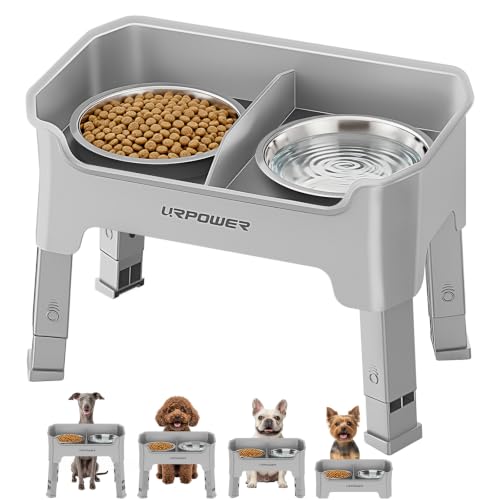
A 360° splash guard plus a center divider keeps food and water from mixing, and the one-piece stand adjusts to four heights with a button press — handy as a puppy grows.
What we love
- Four adjustable heights
- 360° splash guard cuts down on mopping
- Non-slip feet
Keep in mind
- Bowls are on the smaller side (20 oz)
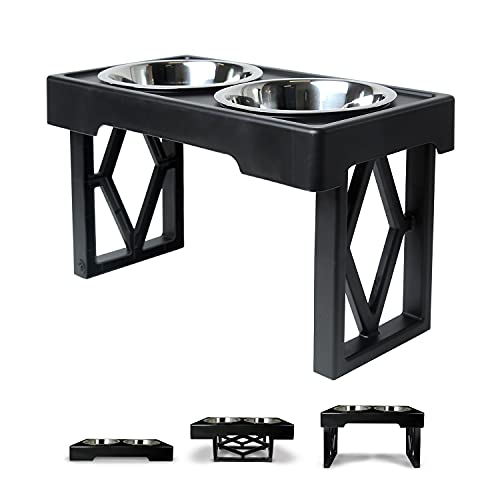
Three height settings (2.75", 8", and 12") let one feeder follow your dog from puppyhood to adulthood. The faux wood-grain finish blends in better than most plastic stands.
What we love
- Grows with your dog (3 heights)
- Large 7-cup stainless bowls
- Looks less utilitarian
Keep in mind
- Tall setting can feel light for big eaters

Huge 64 oz bowls and a sturdy dual-height frame (4.63" or 12.25") make this a strong value for big breeds. A raised outer rim helps keep water and kibble in the dining zone.
What we love
- Generous 64 oz bowls
- Two heights for growing dogs
- Made in the USA
Keep in mind
- Stock can be limited

If you'd rather skip plastic and stainless, this iron-framed stand pairs two ceramic bowls with a built-in slow feeder bowl — a nice touch for dogs that inhale their food.
What we love
- Heavyweight ceramic bowls
- Includes a slow-feeder bowl
- Non-slip, stable iron frame
Keep in mind
- Heaviest and priciest option here
Frequently asked questions
Do elevated dog bowls cause bloat?
This is a common point of confusion. Older advice suggested raised bowls prevent bloat (gastric dilatation-volvulus, or GDV), but a large Purdue University study actually found that elevated feeders were associated with a higher risk of bloat in large and giant breeds. If your dog is a deep-chested breed prone to GDV, talk to your veterinarian before switching to a raised feeder.
What height should an elevated dog bowl be?
As a rule of thumb, the bowl rim should sit roughly at your dog's lower chest or elbow height so they can eat without craning down or reaching up. Adjustable-height feeders are useful because you can fine-tune the fit and raise it as a puppy grows.
Are raised bowls good for senior dogs?
Many owners of older dogs with arthritis or neck stiffness find that a modest lift makes eating more comfortable. If your dog has joint pain, pair a comfortable feeder with a vet-recommended joint routine — see our guide to soothing sore joints.
How do mess-free feeders actually stay clean?
Most use a wide catch tray or a splash-guard rim that traps spilled water and dropped kibble, plus non-slip feet so the station can't be shoved across the floor. Removable, dishwasher-safe stainless bowls make daily cleanup quick.
About the author
James Martin
I'm an animal lover through and through. I grew up with dogs, my family always had at least one pet, and today I share my home with a rescue who is the love of my life. I started Healthy Puppy Review to help owners cut through the marketing noise and make confident, well-researched choices about their dog's health and happiness.