3 Reasons Crate Training Your Puppy Will Make Your Life Easier
Done humanely, a crate becomes your puppy's safe den — and your shortcut to faster house-training, fewer accidents, and calmer nights. Here's how to do it right, plus the crates we recommend.

Contains affiliate links · our policy
In this guide
Bringing home a new puppy is equal parts joy and chaos. The single tool that does the most to tame that chaos isn't a fancy gadget — it's a crate. Used the right way, a crate gives your puppy a safe den of their own and gives you a faster, calmer path through house-training, those frantic first weeks, and the inevitable midnight wake-ups. Used the wrong way, it can backfire. Here's the difference, and the crates worth buying.
3 Reasons Crate Training Works
1. It makes house-training dramatically faster. Dogs have a strong instinct to avoid soiling the spot where they sleep. A correctly sized crate uses that instinct to your advantage: your puppy learns to hold it, and you learn their rhythm, so you can carry them straight outside after naps, meals, and play. Fewer accidents on the rug means fewer setbacks and a house-trained dog weeks sooner.
2. It keeps your puppy safe when you can't supervise. Puppies chew electrical cords, swallow socks, and find trouble in seconds. A crate is a secure place to settle them while you shower, cook, or sleep — no chewed baseboards, no emergency vet trip for something they ate. If you're stocking up on safer things to chew, our roundup of must-have toys for a new puppy is a good place to start.
3. It gives your puppy a calm den and eases anxiety. Dogs are den animals by nature. Once the crate feels like theirs, it becomes a retreat where an overstimulated puppy can decompress — during a thunderstorm, a busy party, or just an overtired evening. That same safe space makes vet visits, travel, and overnight stays far less stressful down the road.
How to Crate Train the Right Way
The whole strategy comes down to one idea: the crate must always be a good place. Build that association slowly and your puppy will walk in on their own.
- Introduce it gradually. Set the crate up with the door open and toss treats just inside, then a little farther in, so your puppy chooses to explore it.
- Feed meals in the crate. Serving dinner inside (door open at first) builds a strong, happy connection with the space.
- Add short closed-door sessions. Once they're comfortable, close the door for a minute or two while they eat or chew, then open it before they fuss. Slowly stretch the time.
- Tire them out first. A puppy who just had a walk, a play session, or a training game will settle far more quickly and quietly.
Never use the crate as punishment
Sending a puppy to the crate as a time-out poisons the very association you're trying to build. If the crate ever becomes the place bad things happen, your dog will resist it — and you lose your best training tool. Keep it strictly positive: treats, meals, and rest only.
A note on timing: don't crate a puppy for longer than they can physically cope with. A handy, shelter- and vet-aligned guideline is your puppy's age in months plus one hour — so a 2-month-old tops out around 3 hours, a 3-month-old around 4 — up to roughly 5 hours during the day for most pups. Puppies hold it a little longer overnight while asleep. For anything longer, use a playpen or arrange a midday potty break. And never shut a genuinely distressed dog in a crate for long stretches; address the anxiety first.
How to Size a Crate (and Why the Divider Matters)
Crate size is the detail people get wrong most often. The crate should be just big enough for your puppy to stand up, turn around, and lie down comfortably — and no roomier. If it's too large, your puppy will simply nap at one end and use the far corner as a bathroom, which defeats the house-training benefit entirely.
The smart way to handle a growing puppy is to buy a crate sized for their adult weight and use a divider panel to wall off a smaller, puppy-sized section. As your dog grows, you slide the divider back to open up more room. That way you buy one crate instead of three.
Match the crate to your dog, not just the breed
Most wire crates list a recommended weight range. Pick by your dog's expected adult weight, then partition down for now. A wire crate also folds flat for travel and lets your puppy see out, which helps anxious pups feel less isolated.
Don't forget the crate is only part of a healthy start. A balanced diet, the right daily vitamin, and — for pups with sensitive tummies — a gentle probiotic all help your puppy feel settled enough to rest calmly in their new den.
How We Picked
We focused on crates that are widely used by trainers, currently in stock, and well reviewed, then weighed the things that actually matter day to day: a divider that grows with your puppy, secure latches, easy-clean pans, and the right options for different breeds and budgets. We also confirmed every product link below is live and points to an available listing.
Our top choice, the MidWest iCrate, earns it for being the versatile default — divider included, folds flat, and sized for nearly any dog. But each pick below is here for a specific situation, whether you're a first-time owner wanting an all-in-one kit, raising a large breed, containing a serious escape artist, or pairing a crate with a roomy playpen for longer days.
Our top picks


The folding wire crate most trainers reach for. It ships with a movable divider so one crate can grow with your puppy, plus a leak-proof pan and double doors that make daily life easier.
What we love
- Included divider grows with your puppy
- Folds flat for travel and storage
- Multiple sizes for any breed
Keep in mind
- Determined chewers can bend the wire
A one-box solution for new puppy parents: the 24" iCrate plus a fitted bed, two clip-on bowls, and a privacy cover that helps a nervous pup settle. The cover also makes the crate feel more like a cozy den at night.
What we love
- Everything a new owner needs in one purchase
- Cover encourages calm, denning behavior
- Good fit for small to medium puppies
Keep in mind
- 24" outgrows large breeds
- Bedding is basic, may need an upgrade
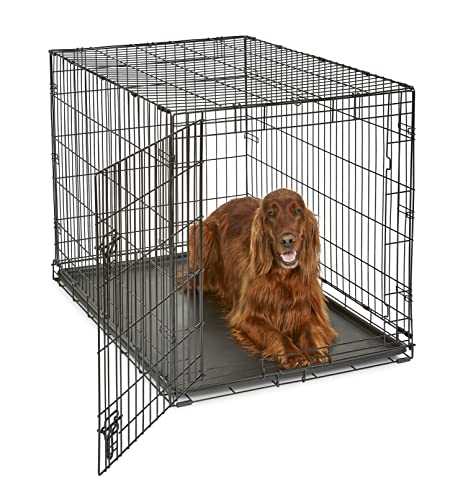
At 42 inches with a divider, this is the value pick for Labs, Shepherds, and other large breeds. Buy it for your dog's adult size and partition it down while they're still a pup.
What we love
- Roomy enough for most large breeds
- Divider lets one crate last from puppy to adult
- Two doors for flexible placement
Keep in mind
- Heavy and bulky once assembled

Built for powerful escape artists and serious chewers, the Empire uses a steel-tube frame and a reinforced lock. It's an investment, but for a dog that has destroyed wire crates it can be the only thing that works.
What we love
- Near escape-proof for strong dogs
- Rolling casters make it movable
- Holds up to heavy chewing
Keep in mind
- Expensive
- Very heavy; not a travel crate
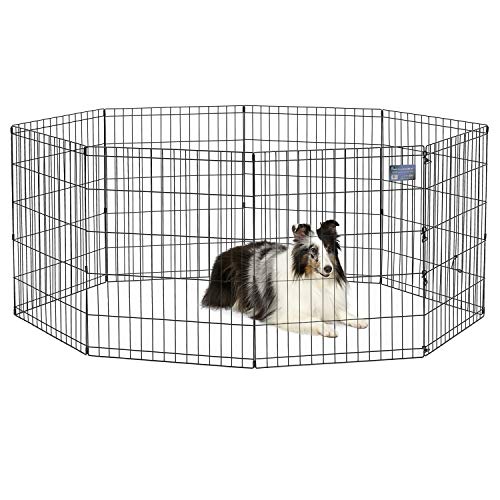
The perfect companion to a crate for those longer, can't-supervise stretches. This 8-panel pen gives your puppy room to stretch, play, and potty on a pad without the run of the whole house.
What we love
- Great for longer unsupervised periods
- Reconfigures to any shape or size
- Folds flat for storage
Keep in mind
- Tall jumpers may need a taller height
Frequently asked questions
What size crate should I get for my puppy?
Pick a crate your dog can stand up in, turn around in, and lie down comfortably in — and no bigger. Too much space lets a puppy sleep at one end and potty at the other, which sabotages house-training. The easy fix is to buy a crate sized for your dog's adult weight and use the included divider panel to wall off a puppy-sized section, then move the divider back as they grow.
How long can a puppy be left in a crate?
A common, vet- and shelter-aligned rule of thumb is your puppy's age in months plus one hour — so a 2-month-old maxes out around 3 hours, a 3-month-old around 4 — up to roughly 5 hours during the day for most pups. Puppies can hold it a bit longer overnight while asleep. Longer than that, use a playpen or a midday potty break instead of extending crate time.
What if my puppy whines or cries in the crate at night?
First rule out a real need — most young puppies genuinely have to go out once overnight. Take them out calmly on a leash for a quick potty break with no play, then back to the crate. For attention-seeking fussing, try placing the crate beside your bed at first, and avoid letting them out the instant they cry so you don't accidentally reward the noise. The whining usually fades within a week or two as the den feels safe.
Should I use a crate or a playpen?
They do different jobs. A crate is the better house-training tool because dogs instinctively avoid soiling where they sleep. A playpen (exercise pen) gives more room to move and is better for longer stretches when you can't supervise. Many owners use both — a crate for sleeping and short confinement, and a pen attached to it for daytime hours.
Is crate training cruel?
Not when it's done humanely. Dogs are den animals and most come to treat a properly introduced crate as their own safe retreat. It becomes unkind only when the crate is used as punishment, or when a dog is shut in too long or while genuinely distressed. Introduce it gradually with treats and meals, keep sessions reasonable, and the crate stays a positive place.
About the author
James Martin
I'm an animal lover through and through. I grew up with dogs, my family always had at least one pet, and today I share my home with a rescue who is the love of my life. I started Healthy Puppy Review to help owners cut through the marketing noise and make confident, well-researched choices about their dog's health and happiness.