Must-Have Toys for a New Puppy
The right toys do more than entertain a puppy — they soothe sore gums, burn off mental energy, and offer comfort. Here's how to choose safely, plus the seven toys we'd put in a new-puppy kit.

Contains affiliate links · our policy

In this guide
A new puppy will chew on something — the only question is whether it's a toy you chose or the corner of your couch. Good toys give that energy somewhere productive to go. The right ones also soothe a sore mouth during teething, work a puppy's brain until it's genuinely tired, and offer comfort when the world feels big and lonely. Here's how to pick toys that do those jobs safely, followed by the seven we'd reach for first.
Why the Right Toys Matter for Puppies
Toys aren't a luxury for a puppy — they're a developmental tool. During teething, which usually peaks between roughly three and six months of age, puppies chew because pressure on swollen gums feels good. Give them an appropriate chew and they're less likely to redirect that urge onto your shoes, baseboards, and hands. Softer rubber toys made specifically for puppies are ideal here, and chilling or freezing a fillable one adds a numbing effect that takes the edge off sore gums.
Toys also build a puppy's brain. Working a puzzle or treat dispenser asks a puppy to problem-solve, and that mental effort is surprisingly tiring — many trainers and veterinarians note that a short session of focused puzzle play can wear a dog out as much as a moderate walk. A mentally satisfied puppy is a calmer, less destructive puppy.
Finally, the right toy offers comfort. A heartbeat plush that mimics littermates can take the sting out of first nights alone in a new home, which makes it a natural companion to crate training your puppy and the routine that helps a pup settle.
The Categories of Must-Have Toys
Rather than buying a dozen random toys, think in terms of four jobs. A good starter kit covers each one.
Chew and teething toys. These are the workhorses of puppyhood. Look for soft, durable rubber that gives slightly under pressure — like a puppy-formula KONG — and avoid hard plastics, antlers, or bones during teething. Stuffable chews you can freeze pull double duty as gum-soothers.
Puzzle and enrichment toys. Treat-dispensing balls and wobblers turn mealtime into a brain game. Start with a beginner-friendly puzzle that matches a short attention span, then dial up the difficulty as your puppy figures it out. These are some of the best tools for the rainy days when a long walk isn't happening.
Comfort toys. A soft plush — especially one with a heartbeat or warmth feature — gives an anxious new puppy something to curl up with. Comfort toys are about emotional security more than play.
Fetch and active toys. Balls and tug toys channel physical energy and build your bond. A small multipack means you always have a spare when one disappears under the furniture.
How to Keep Toys Safe
Two factors do most of the safety work: size and hardness.
For size, choose toys your puppy can't fit fully into the mouth, and that won't break into swallowable chunks. A toy built for a large breed may be too unwieldy for a tiny pup, while a small-dog toy can be a choking hazard for a bigger puppy. When you're between sizes, size up.
For hardness, use the classic rule of thumb: press your fingernail into the toy. If you can't leave a slight indentation — and if whacking it against your knee would hurt — it's too hard and can fracture teeth. Teething puppies in particular do best with toys that flex a little.
Always supervise play and inspect toys regularly
No toy is fully chew-proof, and the safest toy is one you're watching. Supervise your puppy with new toys and any chew, and step in if they start tearing off pieces or pulling out stuffing — swallowed fragments and plush filling are real choking and blockage risks. Check each toy often for cracks, splits, and loose squeakers, and throw away anything damaged instead of trying to fix it.
A few more habits help: rotate toys so only a handful are out at once, which keeps them interesting and gives you a built-in moment to inspect them; pick non-toxic materials; and match the toy's job to your puppy's stage. A daily routine that pairs the right toys with good nutrition and supplements — like a puppy vitamin or a digestive probiotic — keeps a growing pup healthy from the inside out.
How We Picked
We chose toys that each clearly own one of the four jobs above, then favored materials and sizes appropriate for puppies — soft, flexible rubber for chewing, beginner-level mechanics for puzzles, and well-reviewed durability for fetch. We weighed real-world feedback on teething relief, ease of cleaning, and how long each toy survives an enthusiastic mouth, and we confirmed every product link below is live. Our overall pick, the KONG Puppy, earns the top spot because it does the hardest job — keeping a teething puppy happily occupied — better and more safely than anything else on the list. Each remaining pick rounds out a balanced, safe starter kit.
Our top picks

The puppy-specific KONG is made from a softer rubber formula that's gentle on teething gums, and the hollow center takes peanut butter, kibble, or a frozen filling for long stretches of focused chewing. It's the toy most vets reach for first.
What we love
- Softer rubber made for puppy teeth and gums
- Stuffable and freezable for teething relief
- Bounces unpredictably for play
Keep in mind
- Fillings can get messy

A two-pack of flavored dental chews shaped with curves that are easy for small paws to grip. They're firmer than the KONG, so they're best for confident chewers — supervise and retire them once they show real wear.
What we love
- Ergonomic shape is easy to hold
- Long-lasting flavored chew
Keep in mind
- Firmer than rubber — not for very young teeth
- Should be replaced once worn down

Three textures in one budget pack let you learn what your puppy actually likes to gnaw. The variety is great for redirecting a chewer away from furniture and shoes during the worst teething weeks.
What we love
- Three textures to test preferences
- Affordable starter set
Keep in mind
- Some pieces wear faster than others

A beginner-friendly treat ball that drops kibble as your puppy nudges it around. The simple mechanic suits a short attention span while still delivering the brain workout that tires a puppy out.
What we love
- Adjustable difficulty as your pup learns
- Slows down fast eaters
- Great low-cost intro to puzzles
Keep in mind
- Can be noisy on hard floors

A weighted wobbler that your puppy bats around to release treats from two adjustable openings. It scales in difficulty, so it keeps challenging your dog well past the puppy stage.
What we love
- Two-stage adjustable difficulty
- Sturdy weighted base
Keep in mind
- Larger size suits medium and bigger pups best

A plush with a real-feel heartbeat and an optional heat pack designed to mimic littermates. Many owners find it eases first-night whining and crate anxiety in a new puppy.
What we love
- Heartbeat can calm a lonely new pup
- Helps with crate and bedtime settling
Keep in mind
- Plush — supervise and remove if chewed open
- Pricier than a basic stuffed toy
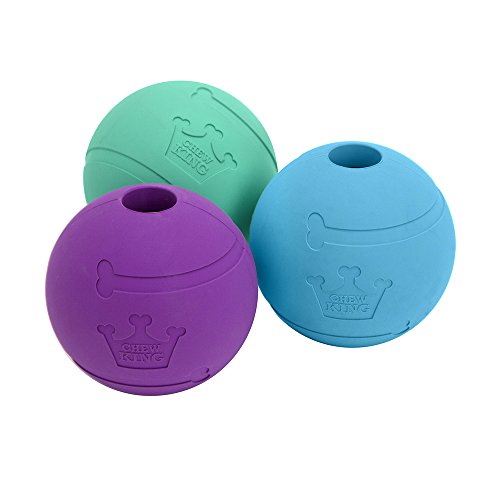
A three-pack of solid rubber balls that bounce well and stand up to enthusiastic mouths. Buying a set means you always have a backup when one rolls under the couch.
What we love
- Durable solid rubber
- Three-pack value
Keep in mind
- Confirm the size fits your puppy's mouth
Frequently asked questions
How do toys help a teething puppy?
Teething usually ramps up between about 3 and 6 months, and chewing on something soft and giving feels good on sore gums. Appropriately soft rubber toys made for puppies are ideal, and chilling or freezing a fillable toy adds a numbing, soothing effect. Skip anything so hard you can't dent it with a fingernail — that can crack baby and adult teeth alike.
How many toys does a new puppy actually need?
You don't need a giant pile. A small starter set that covers each job — a chew/teething toy, a puzzle or treat dispenser, a comfort plush, and a fetch toy — is plenty. What matters more than quantity is rotating a few in and out so they stay novel.
What size toy is safe for my puppy?
Pick a toy big enough that your puppy can't fit the whole thing (or a broken-off chunk) toward the back of the mouth. A toy sized for a large breed can be unwieldy for a tiny pup, and a small-dog toy can be a choking hazard for a bigger one. When in doubt, size up and supervise.
Should I rotate my puppy's toys?
Yes. Keeping only a few toys out at a time and swapping the rest every few days makes old toys feel new again, which keeps a curious puppy engaged without buying more. It also gives you a regular moment to inspect each toy for damage.
Do I need to supervise puppy playtime?
For new toys and any chew, yes — especially early on. Watch how your puppy interacts with it, and step in if they start tearing off pieces or shredding stuffing. Toys with squeakers or removable parts should be supervised, and broken toys should be thrown away, not repaired.
About the author
James Martin
I'm an animal lover through and through. I grew up with dogs, my family always had at least one pet, and today I share my home with a rescue who is the love of my life. I started Healthy Puppy Review to help owners cut through the marketing noise and make confident, well-researched choices about their dog's health and happiness.